
Morning Fog Photography
Why Waking Up Early Is Worth It
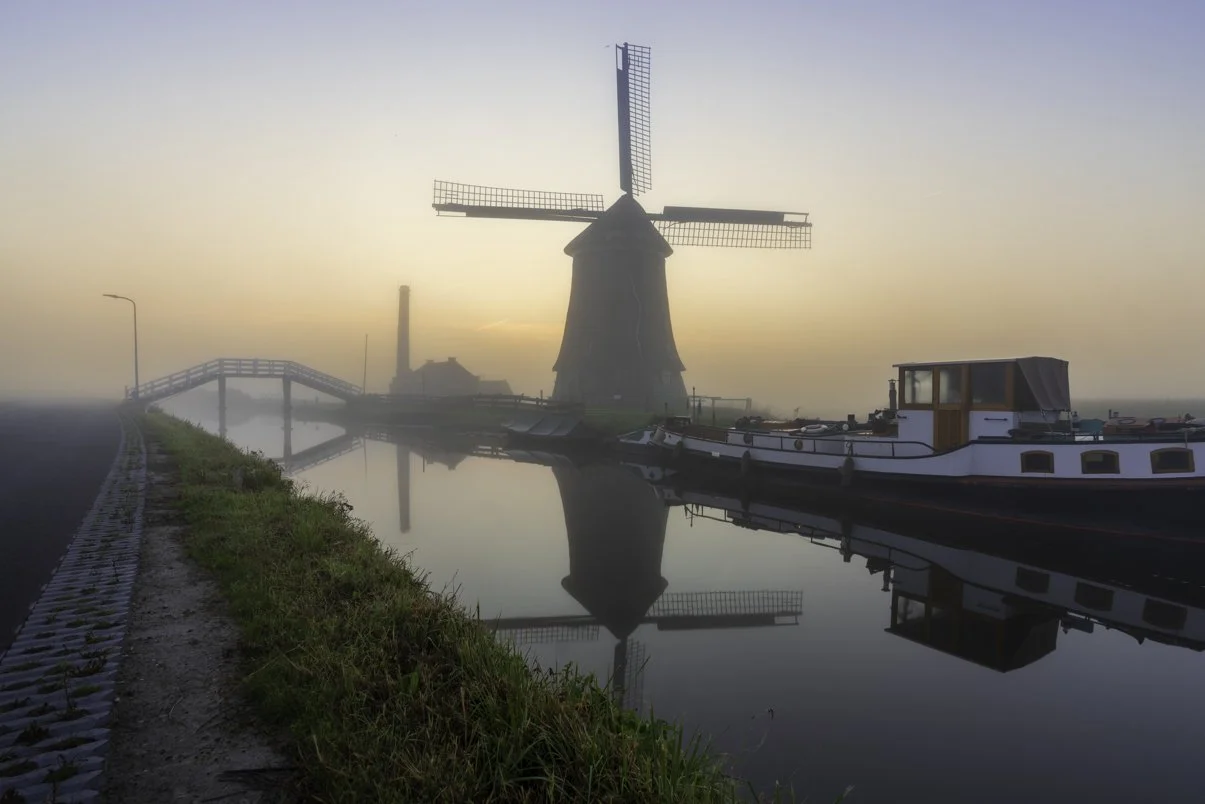
The magic of morning fog
There are mornings when everything aligns perfectly. The air is still, the grass is damp, and a thin layer of fog drifts quietly across the landscape. For a brief moment, the world feels paused.
Those are the mornings when I grab my camera and head out early.
I experienced one of those moments at the Kaagmolen windmill in Opmeer. As the sun slowly rose, the fog turned golden. For a few short minutes, light, atmosphere, and composition came together.
In this guide, you’ll learn why morning fog is so powerful in landscape photography and how you can capture it consistently.
Why Morning Fog Creates Magical Landscape Photos
Morning fog adds mood, depth, and simplicity to a scene. It transforms ordinary landscapes into atmospheric images that feel calm and timeless.
Fog typically forms after:
Clear nights
High humidity
Little wind
Cooler temperatures
When fog meets early sunlight, the result is visual magic.
The Power of Early Morning Light
The light just after sunrise is soft, warm, and directional. This low-angle light:
Creates long shadows
Enhances textures
Keeps contrast manageable
Golden Hour and Fog
Fog often appears during the golden hour, when the sun is low and the light changes rapidly. My favorite moment is just before the sun breaks through the horizon, when light is diffused and scenes feel almost painterly.
This is the perfect time to:
Photograph silhouettes
Create layered compositions
Emphasize depth in the landscape
Fog as a Natural Light Modifier
Fog works like a giant softbox. It:
Softens harsh lines
Reduces background clutter
Simplifies compositions
Shoot Into the Light
Shooting toward the sun can produce:
Light rays
Warm color tones
Strong atmospheric depth
Subjects that work especially well in fog:
Trees
Windmills
Church towers
Isolated buildings
Their recognizable shapes remain visible even when partially obscured.
Practical Tips for Photographing Morning Fog
Preparation is essential for successful fog photography.
Plan Ahead
Check weather conditions the night before. Useful tools include:
PhotoPills
Windy
Yr.no
Look for calm wind and clear nights.
Arrive Before Sunrise
Arrive at least 30 minutes before sunrise. Fog and light change quickly, and early arrival gives you time to refine compositions.
Use a Tripod
Low light means slower shutter speeds. A sturdy tripod helps maintain sharpness and flexibility.
Dress for the Conditions
Foggy mornings are colder than expected. Wear:
Thermal layers
Gloves
Waterproof shoes
Comfort helps you stay focused.
Why Morning Photography Is About More Than Images
Early-morning photography isn’t just about creating strong photos—it’s about slowing down.
These quiet hours encourage patience and observation. Often, it stops feeling like work and becomes something closer to meditation.
Just you, the landscape, and the light.